
Dutxa Showee per hospitals i residències
Showee

Gràcia, Barcelona | 2025
Type of intervention: Interior renovation and adaptation
Dimensions: 119m²
Duration: 8 weeks
La Residència de Gràcia, centre públic de residència assistida, centre de dia i casal per a gent gran, va iniciar un procés de transformació amb un objectiu molt clar: convertir la recepció en un espai més acollidor, funcional i alineat amb la manera com avui s’utilitza.
L’entrada d’un centre sociosanitari no és només un punt de pas. És el primer contacte amb les famílies, un espai de trobada, d’informació i també un lloc de treball intensiu per a l’equip de recepció. El repte era millorar l’experiència de tothom sense interrompre l’activitat diària del centre.
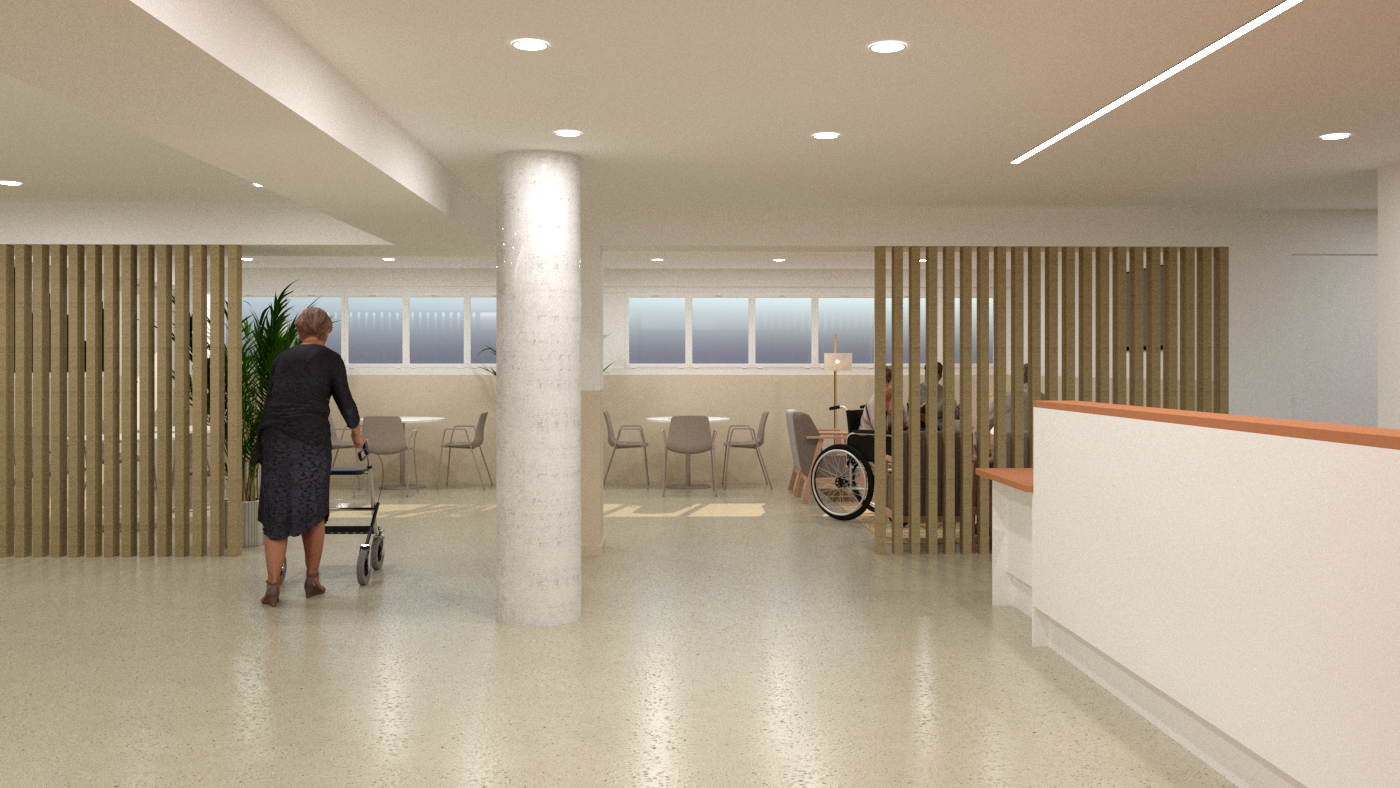
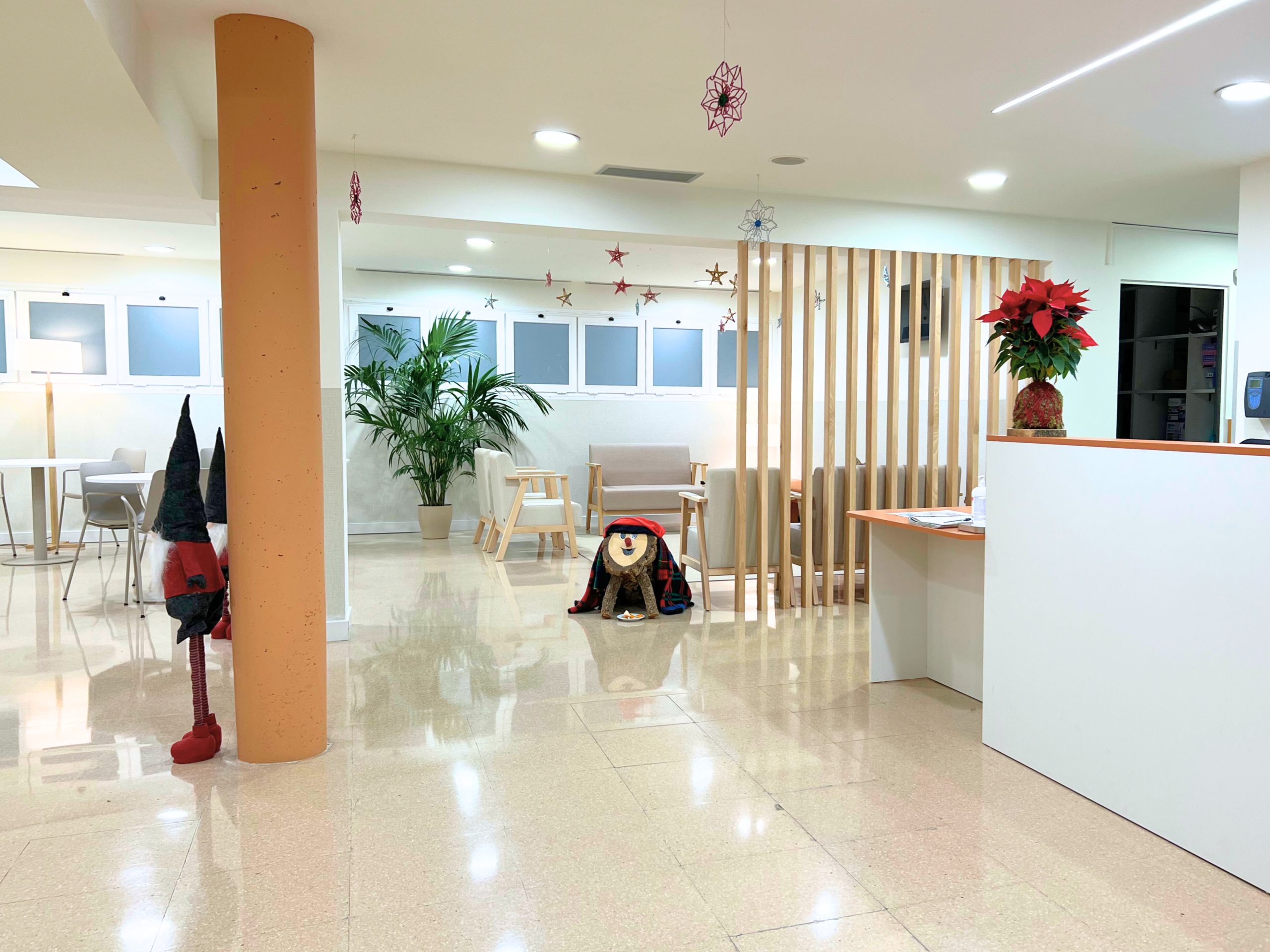
The managers of the center needed:
Modernizing the reception image
Make the space brighter and more pleasant
Improve the working conditions of staff
Create Family-Friendly Meeting Areas
Adapting the space to users with reduced mobility
In addition, as it is a health center in operation, it was essential to minimize demolition, noise and construction time.
The Gràcia Residence came to Efebé on the direct recommendation of another public center, the Santa Coloma Residence, with whom we had already worked previously. This prior trust was key, but so was our turnkey service: comprehensive permit management, safety coordination, weekly monitoring of the work and a single point of contact throughout the process.
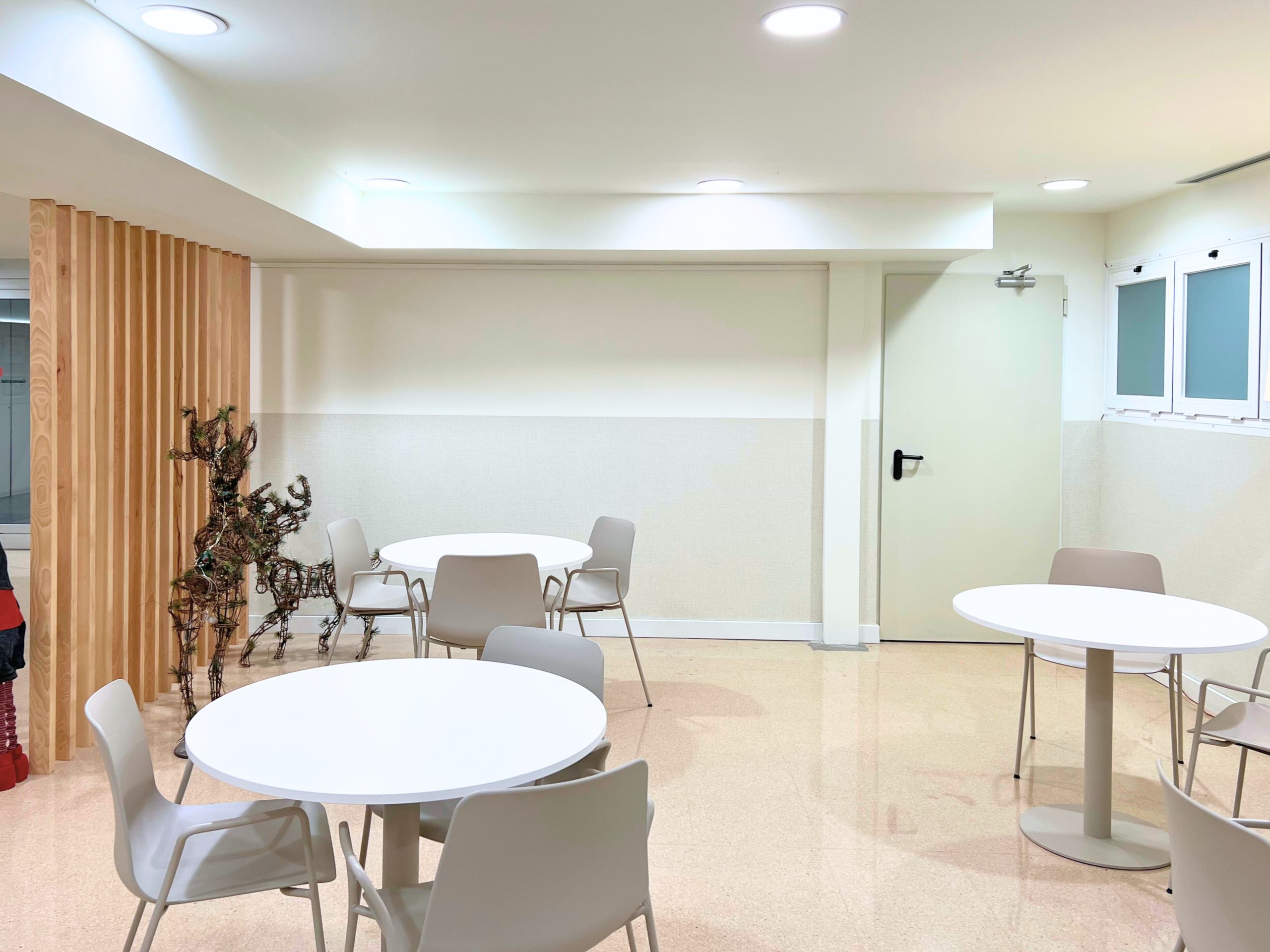
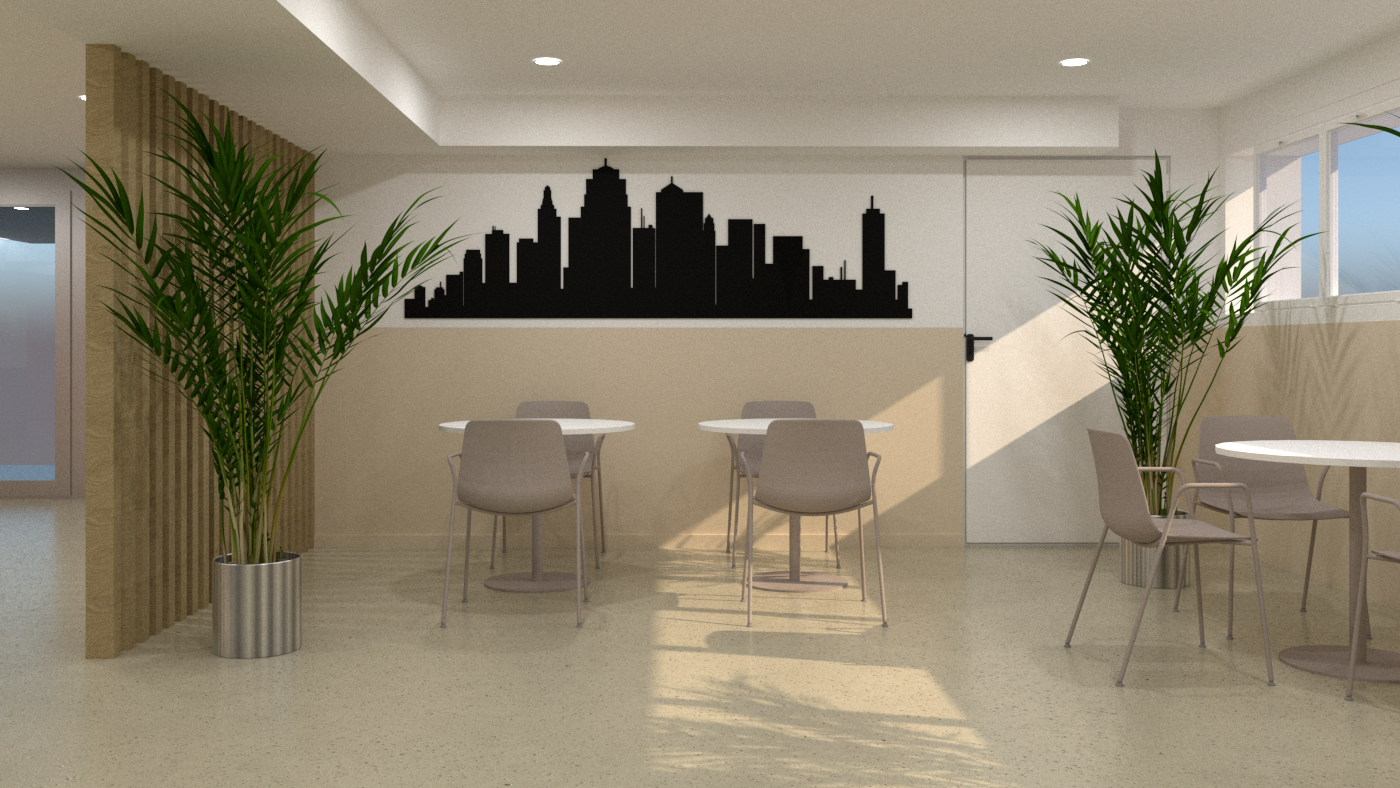
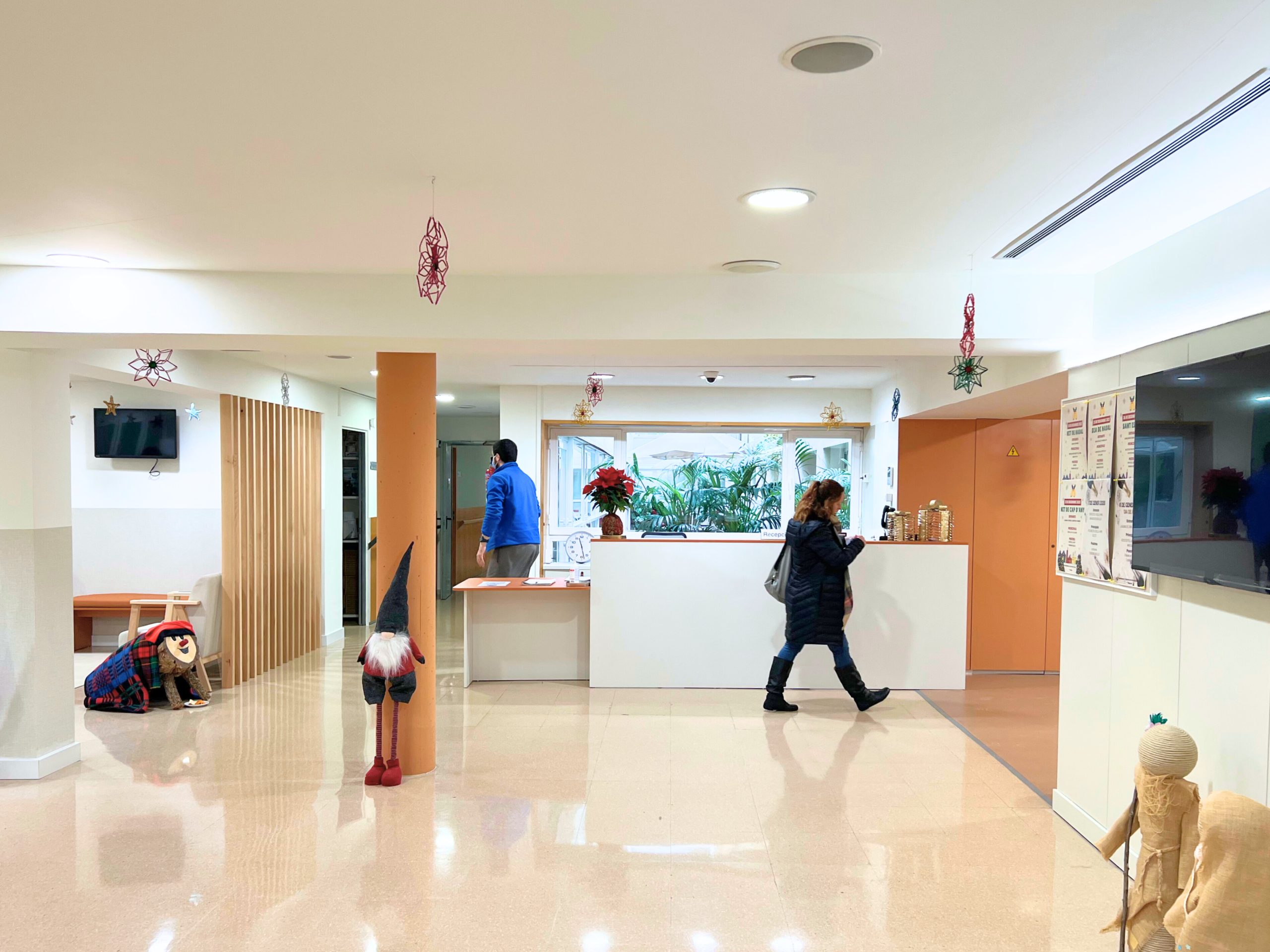
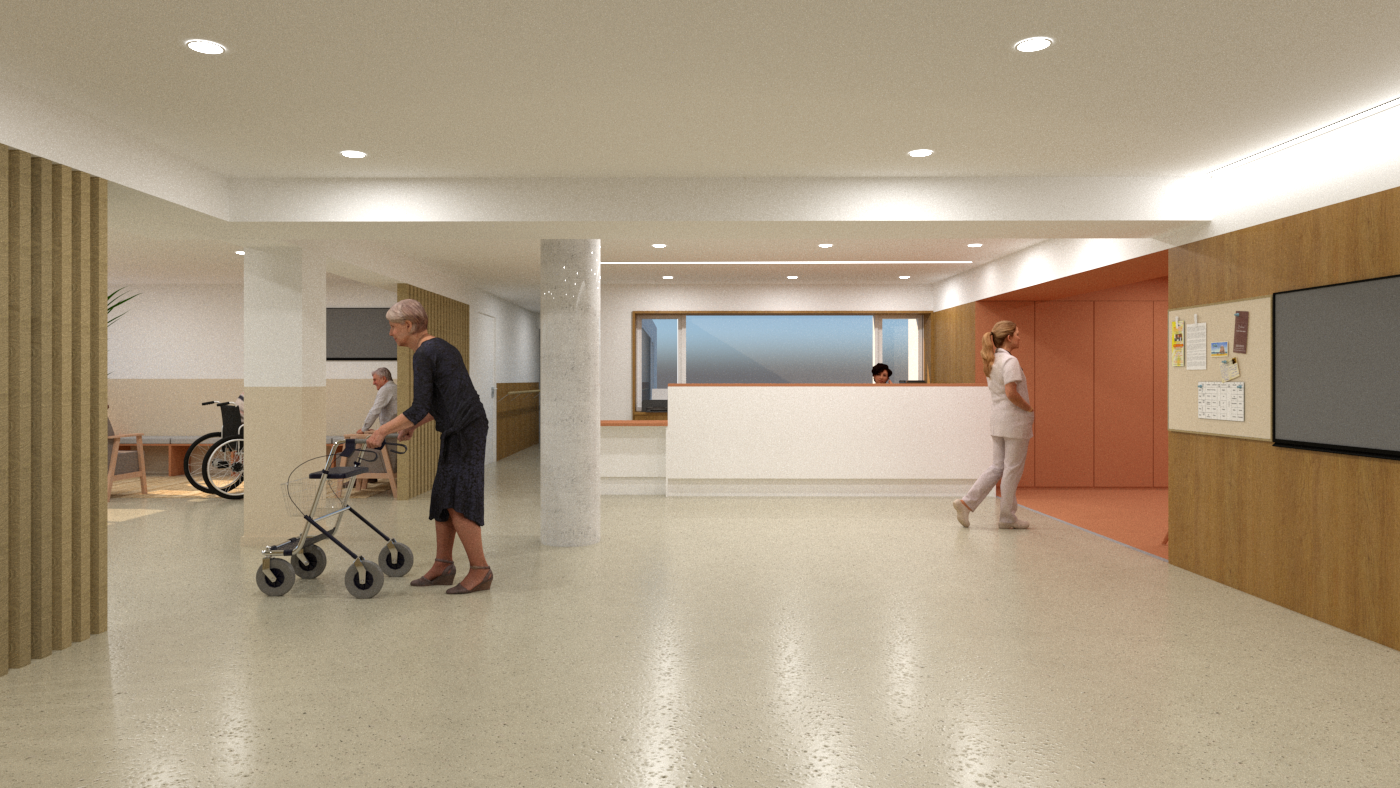
The existing counter did not allow good internal mobility. Its location was completely rethought to improve workflows and designed:
A new counter with part adapted for people with wheelchairs
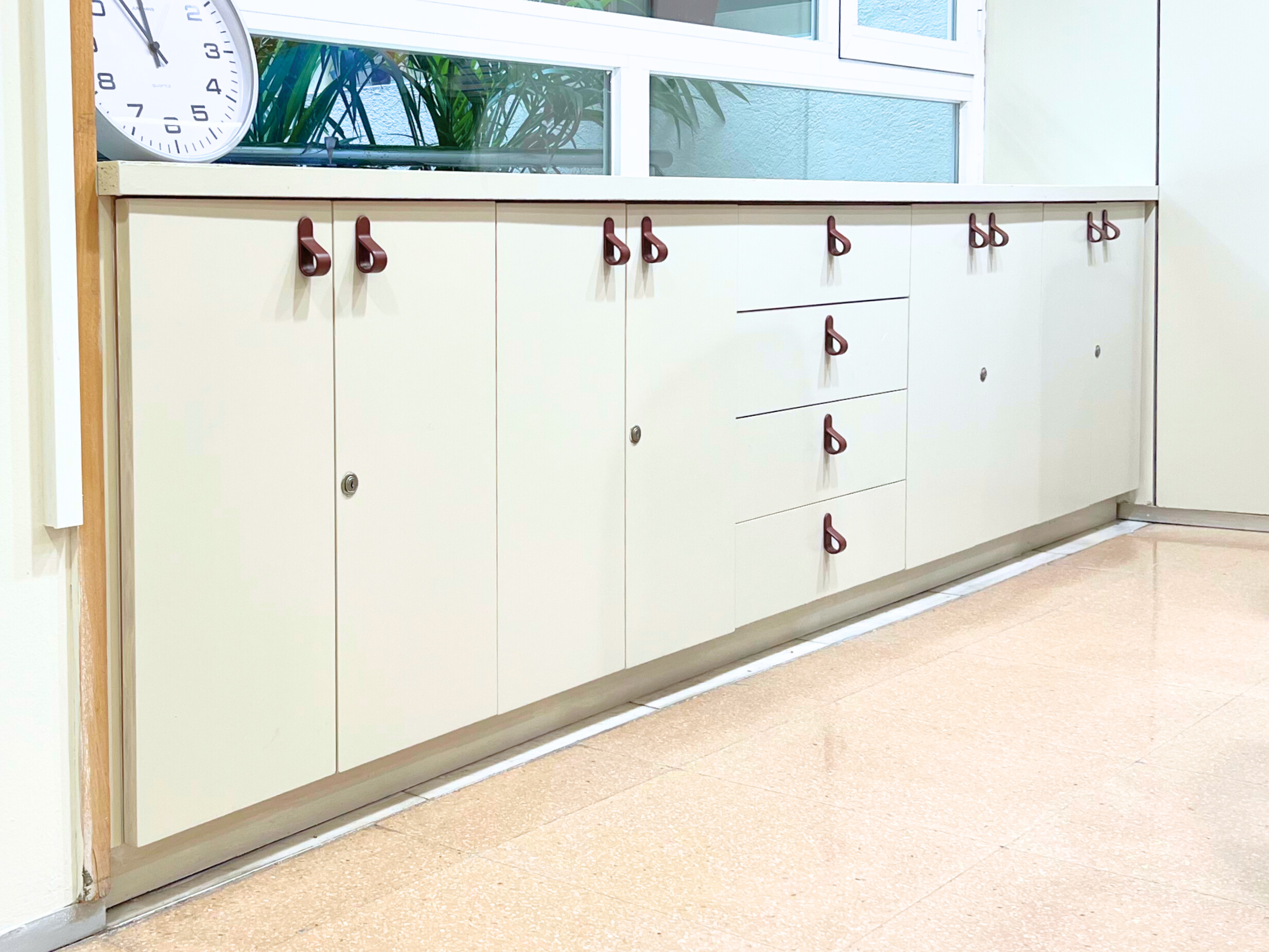
More storage capacity with drawers and closed furniture
Integration of installations under furniture to maintain a clean and tidy image
Part of the existing auxiliary furniture was restyled: it was painted, finishes were changed and aesthetically integrated with the new counter, reducing rubble and waste.
In the area between the reception and the day centre, the deteriorated vinyl flooring was replaced and technical elements that remained visible were resolved.
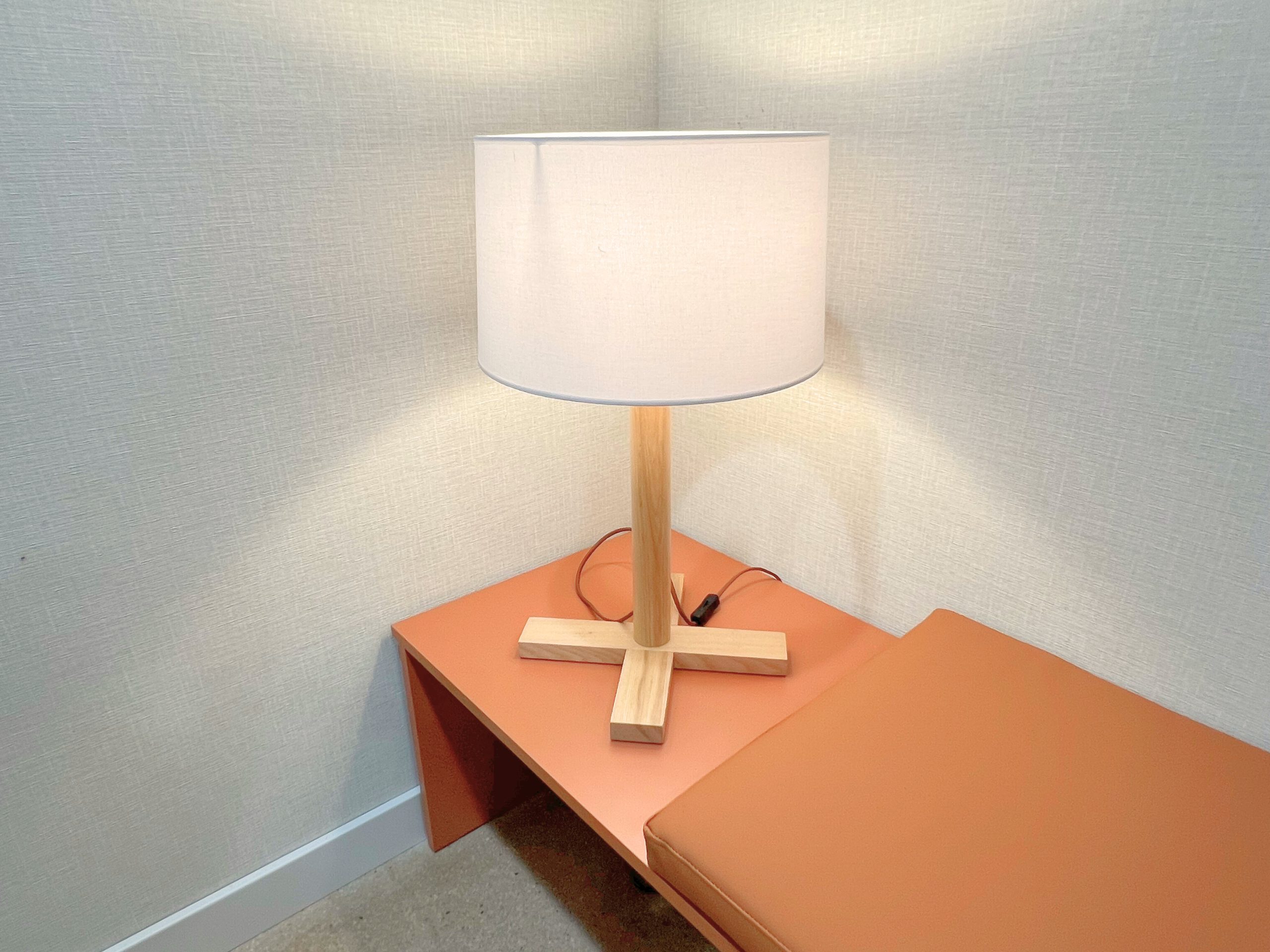
A key change was the move from clinical green to a terracotta range, a warmer and more timeless color that visually connects with the day center and humanizes the space.
This same chromatic criterion was applied to benches and reused existing elements, ensuring visual coherence throughout the route.
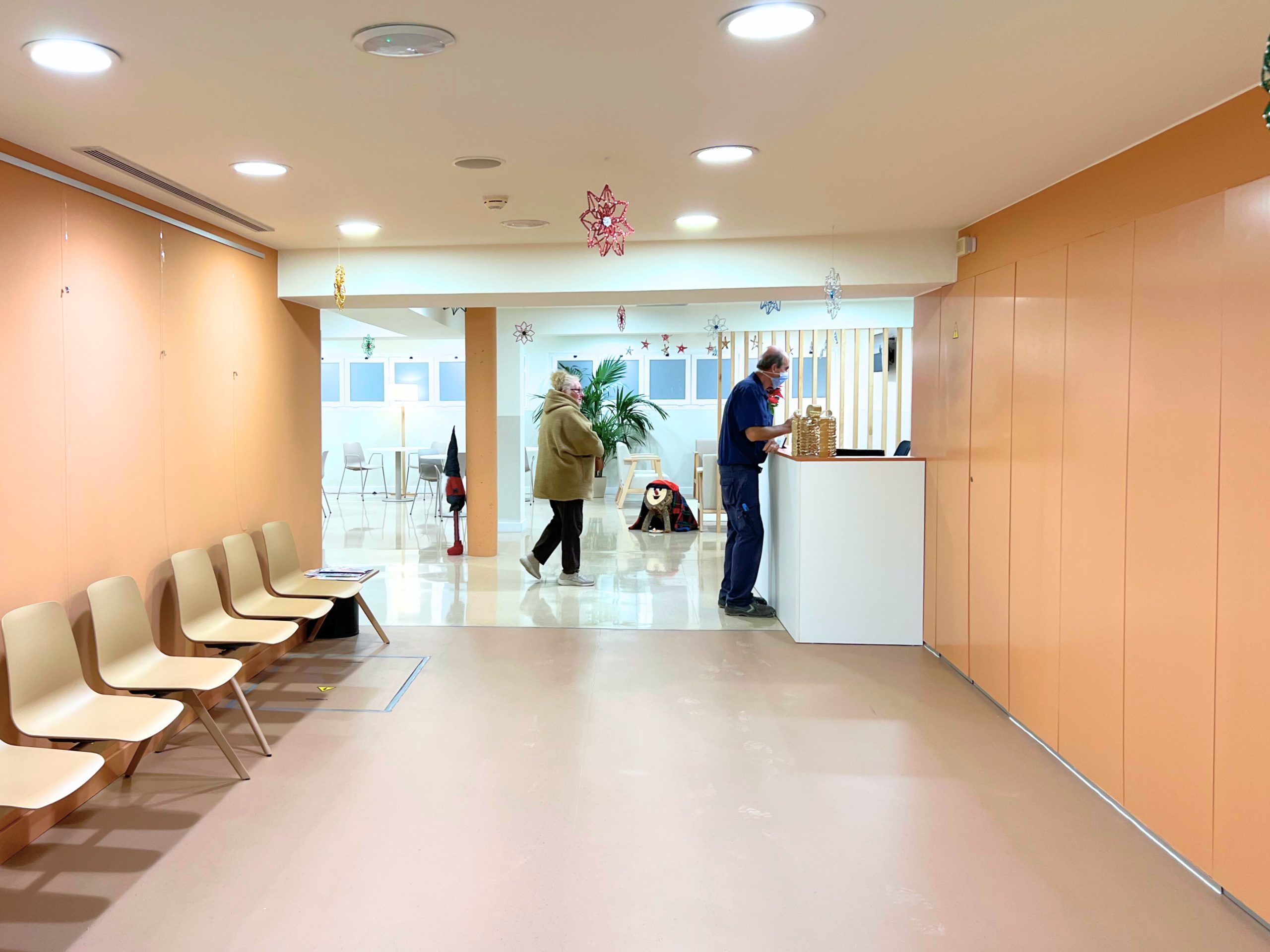

Furniture that generated darkness and was not used was eliminated, and the space was rethought to make it clearer and more communicative:
Incorporation of a digital screen to inform families and users
Maintenance of physical panels with upholstered boards, which allow flexible communication
Better visual balance between information, space and circulations
The space had significant lighting deficiencies. A specific lighting study was carried out and the following were incorporated:
LED strips to reinforce the user’s journey
Improvement of work lighting at reception
New strategic points to promote daily activities
The result is a clearer, safer and more pleasant space, both for users and staff.
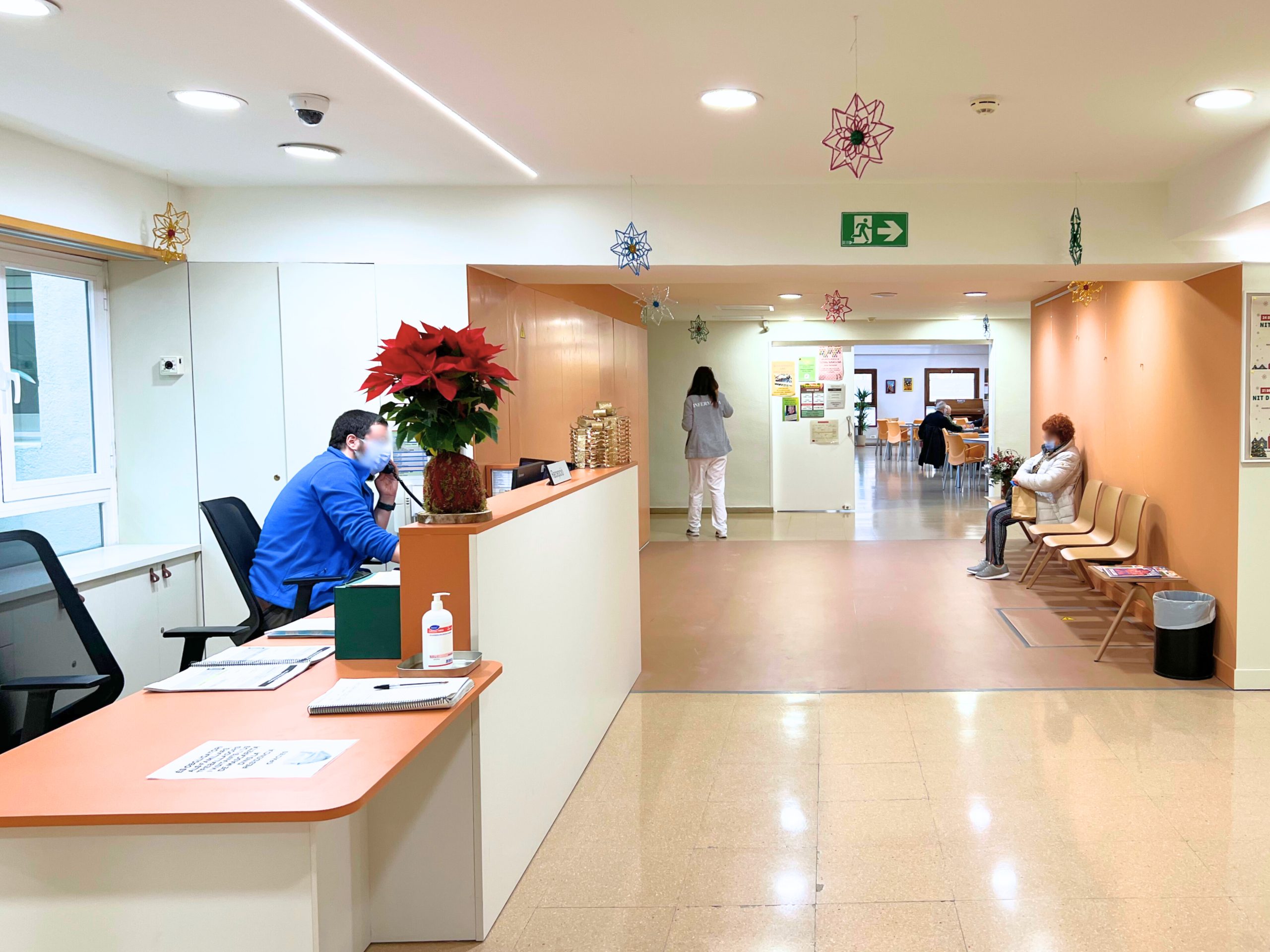

One of the great challenges was to create a comfortable living space on a ground floor with no party walls and little natural light to enter.
The solution was a lattice-type wooden partition, which:
Allows light to pass through
Give privacy to family gatherings
Maintain visual control from reception
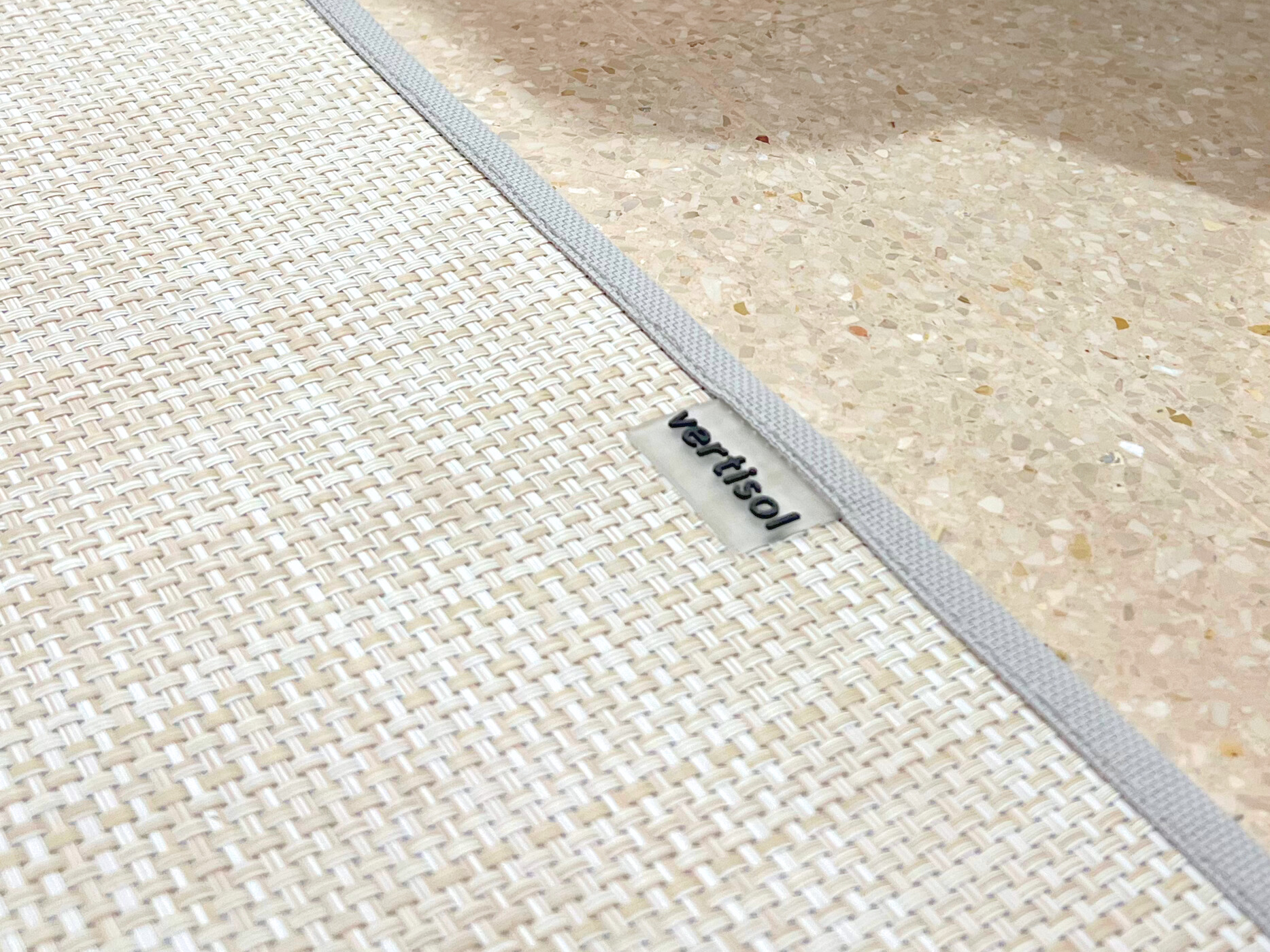
A variety of adapted furniture was incorporated: armchairs with armrests, benches, comfortable chairs and a recycled plastic yarn mat, easy to clean and fully accessible for wheelchairs.
A specific area was also created with tables and chairs for playing, reading or conversing, bringing life and real use to the space.
This project was developed with a constant weekly dialogue with the client. From colours to specific details – such as the treatment of an existing column with a terracotta finish – all decisions were made in a shared way.
At Efebé they don’t impose a design: they accompany it. This guarantees spaces that work because they respond to the real day-to-day life of the center.
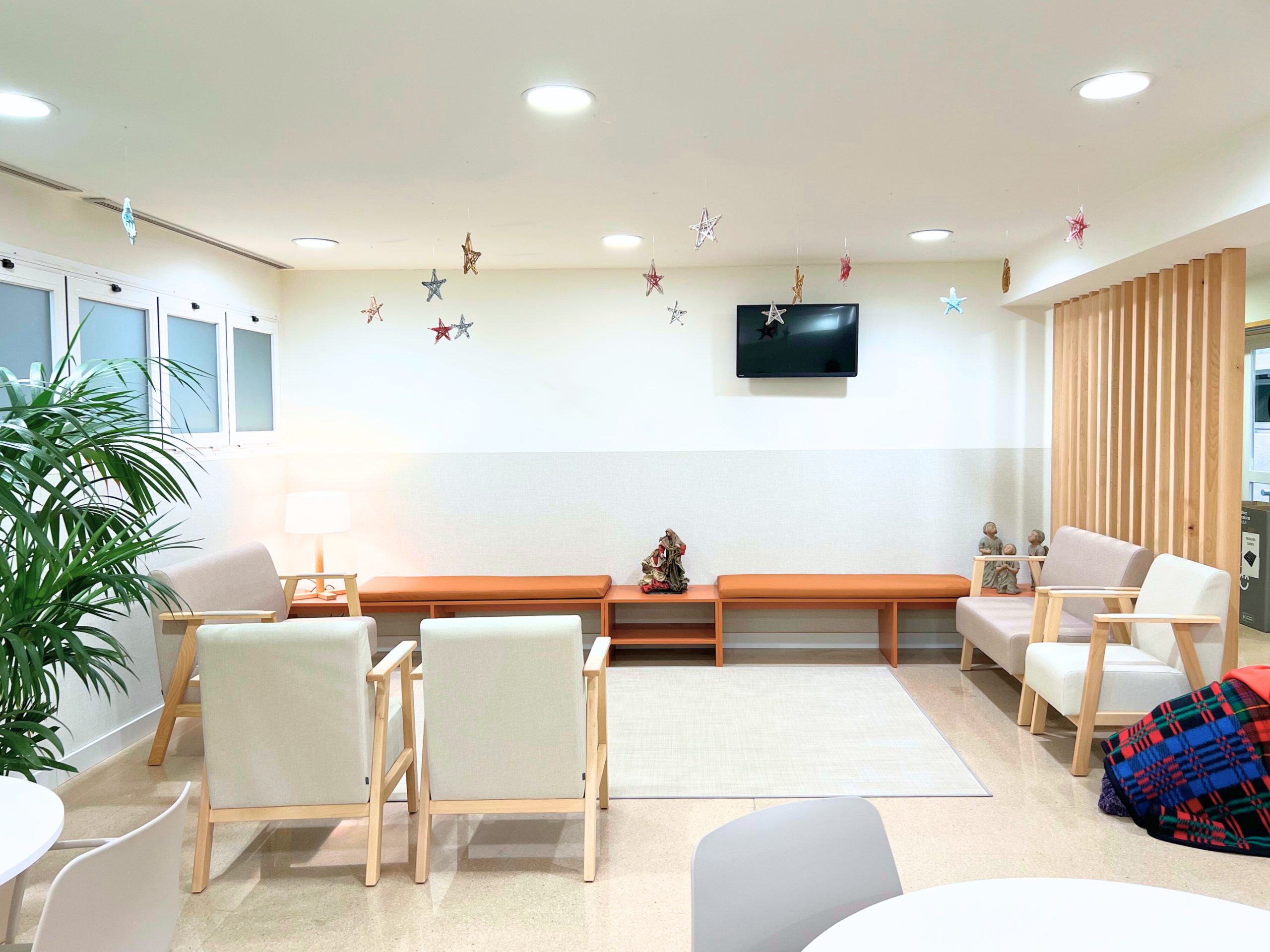
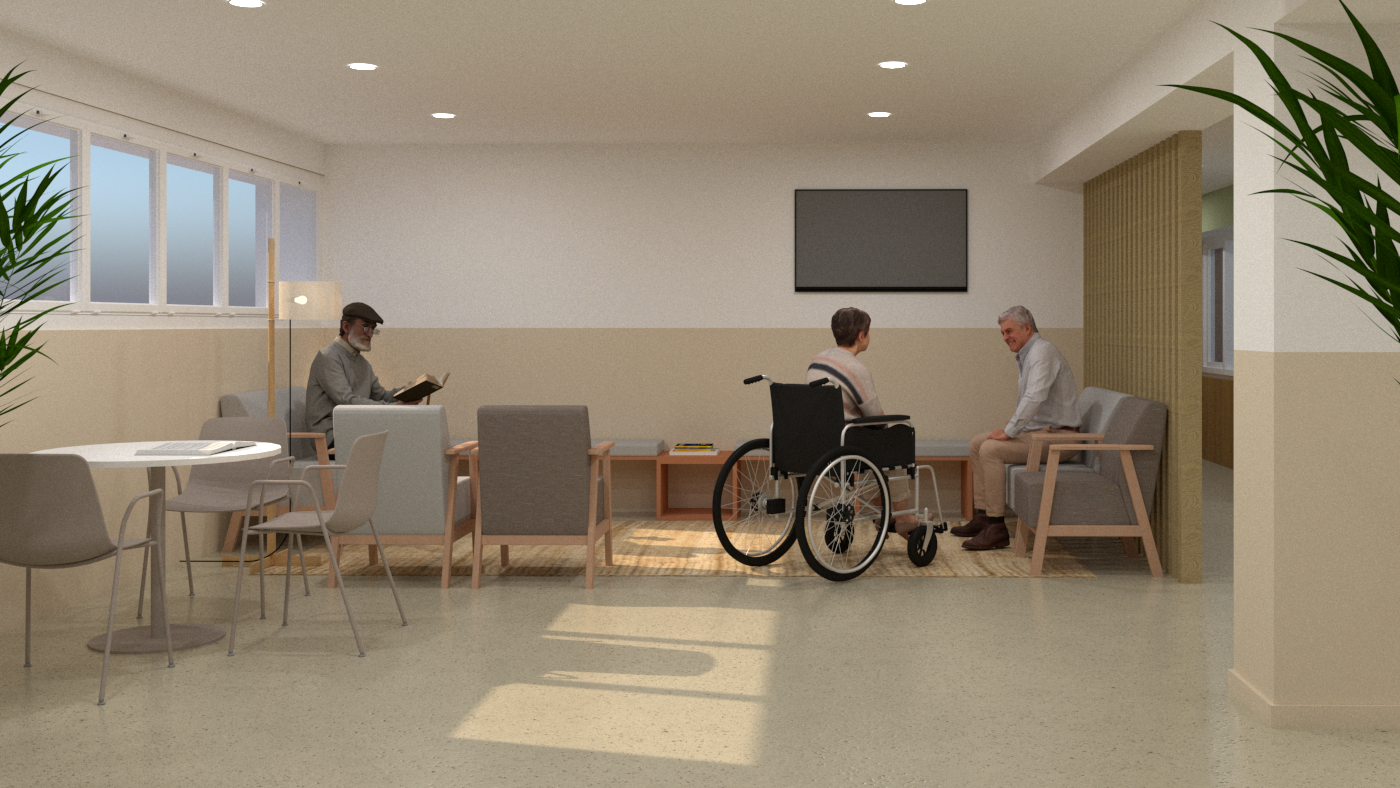
In the living room, the wood paneling that generated darkness was replaced by a Vescom coating with low emissions, improving indoor air quality.
The entire project was executed with water-based paints and materials designed for healthcare environments, where comfort and health are essential.
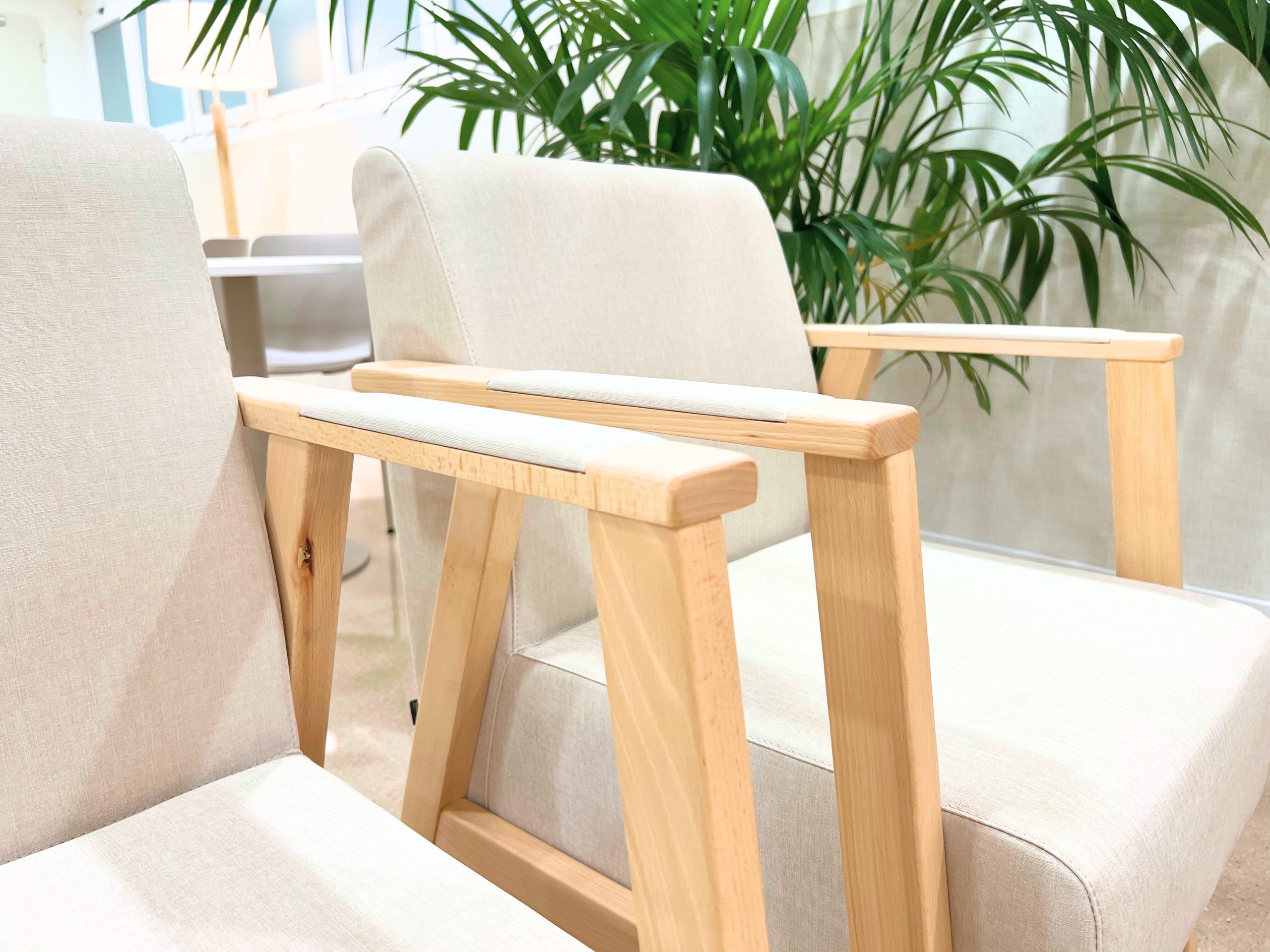
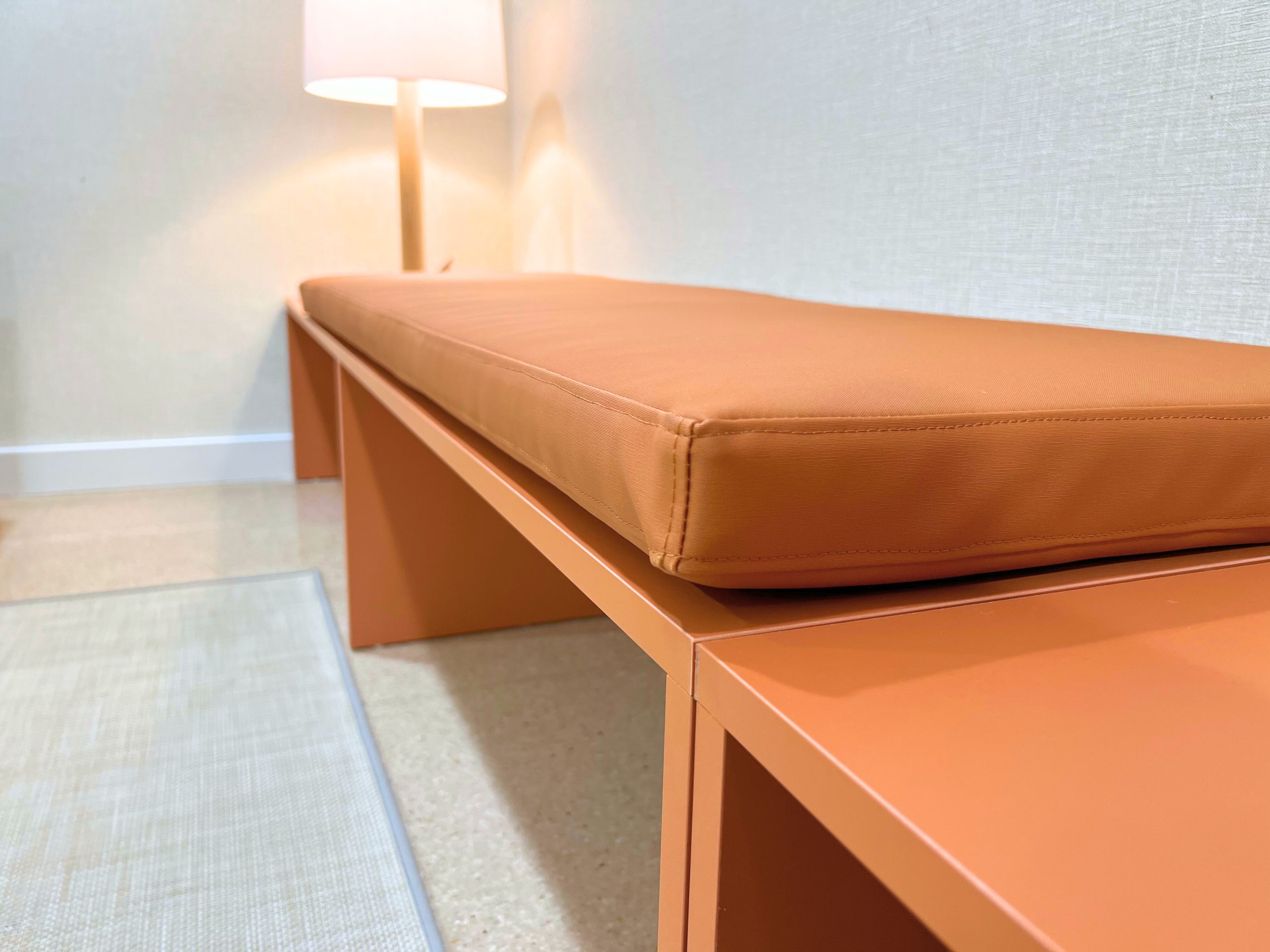
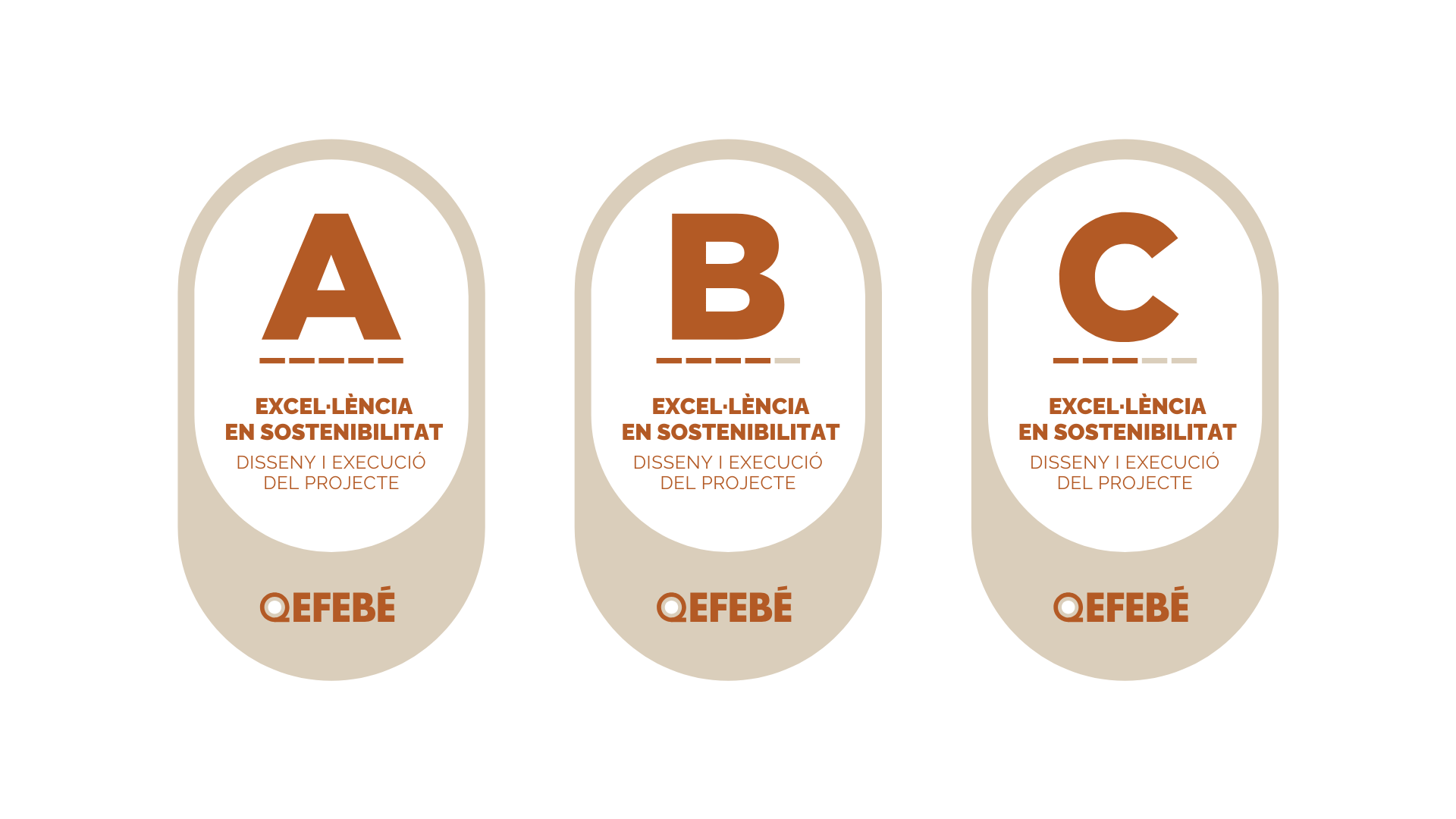
The Residencia de Gràcia has the Seal of Excellence in Sustainability from Efebé*, a proprietary tool that evaluates the environmental, social and economic impact of our projects.
In this case, the project has obtained a very high rating, thanks to key decisions such as:
Reduction of debris and maintenance of the existing distribution
Reuse and restyling of the centre’s own furniture
Use of materials with low environmental impact and low emissions
Wood with up to 66% recycled material and environmental certification
Local suppliers (less than 1,000 km), reducing transport emissions
Responsible management of construction waste
* In the process of calculation and publication.
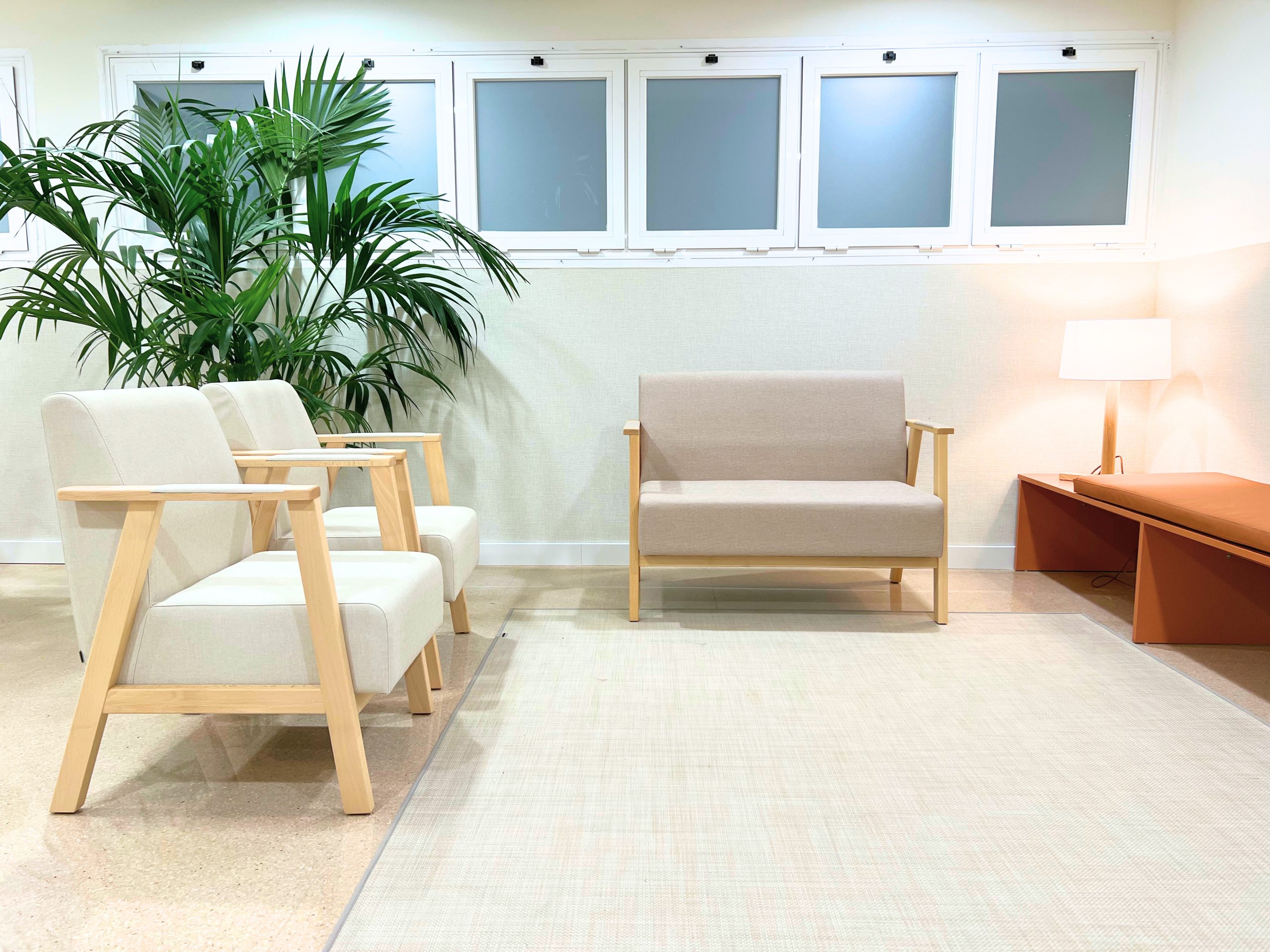
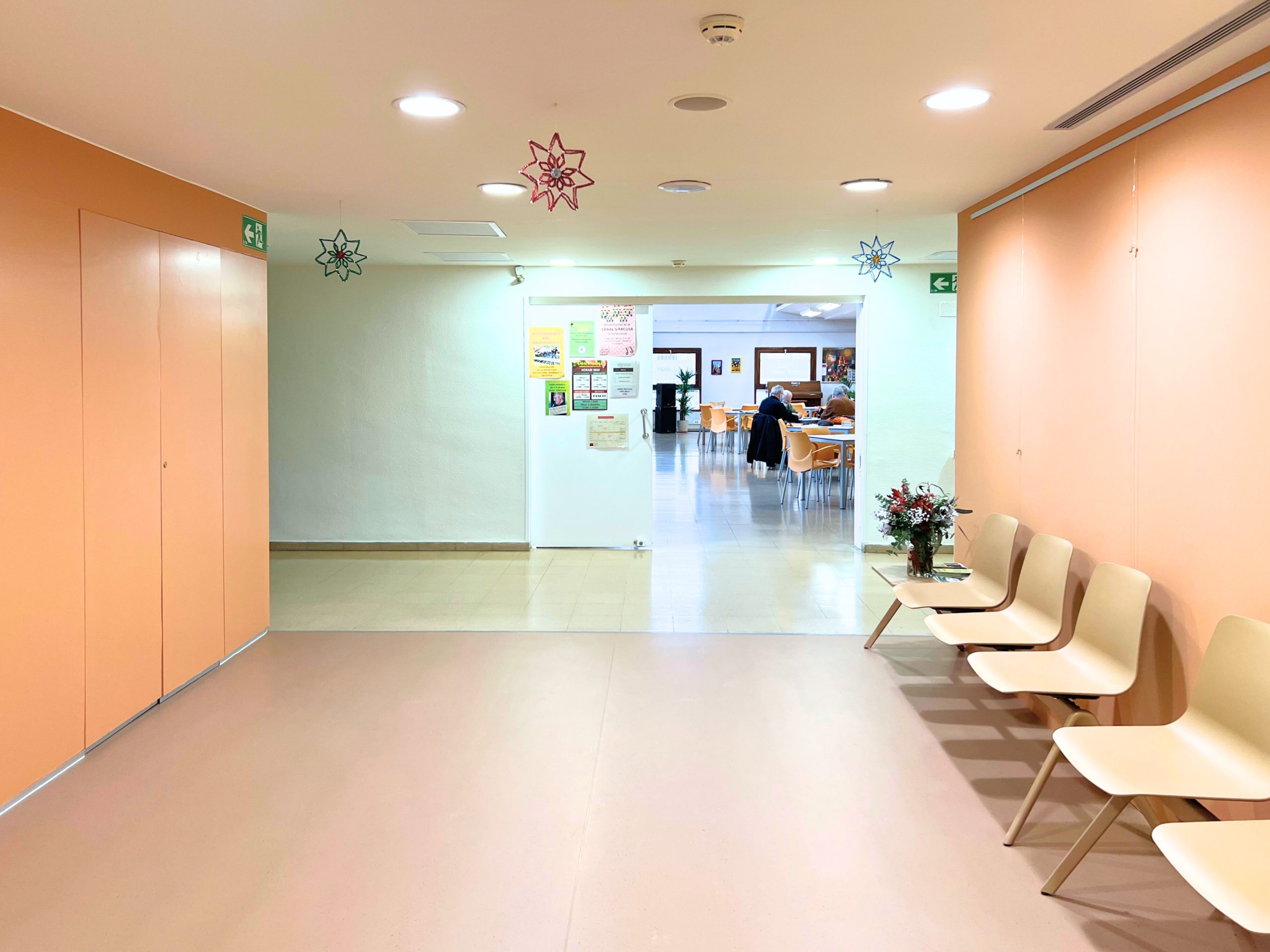
The new reception of the Residencia de Gràcia is now a more human, bright and functional space, which improves the user experience, facilitates the work of the staff and reinforces the centre’s commitment to sustainability.
A project that shows that designing with meaning, dialogue and responsibility is the best way to generate positive impact.
